
A Practical Guide to Leakage Testing of Zinc Die Castings: 5 Steps to Improve Product Quality
In the rapidly developing manufacturing industry, zinc die castings are widely used in automobiles, electronics, home appliances and other fields due to their excellent physical and chemical properties.As market competition intensifies, the stability and reliability of product quality have become the lifeline of enterprises.According to industry data, nearly 80% of product returns are related to quality control, among which leakage problems are particularly prominent.Therefore, it is particularly important to implement effective leak testing of zinc die castings.This article will introduce you to the five major steps to improve the quality of zinc die casting products and help you remain invincible in the industry.
Understand the importance of zinc die casting leak testing
The main purpose of zinc die casting leakage testing is to ensure that the casting does not leak liquid or gas in the working environment.Leakage will not only affect product performance, but also endanger user safety and cause huge economic losses to enterprises.According to the "Global Manufacturing Report 2022", about 30% of manufacturing companies have suffered customer complaints due to leakage issues, which directly affects brand reputation.Conducting leak tests can effectively improve the market competitiveness of products and reduce potential return risks.
Step 1: Choose the appropriate leak detection method
Based on the characteristics of zinc die castings, you can choose different leak detection methods, including gas leak detection and liquid leak detection.When it comes to gas leak detection, helium leak testing is considered the best option due to its accuracy and sensitivity.On the other hand, for liquid detection, both water immersion and stain methods provide good results.For example, using helium leak testing, leaks as small as 1×10⁻⁹ can be detected, which greatly improves the reliability of detection.Choosing a suitable method is the first step in ensuring product quality.
Step 2: Perform effective preprocessing
Proper pretreatment procedures are critical to the accuracy of leak testing.Before conducting the test, ensure that the surface of the zinc die casting is clean, dry, and free of oil, dust and other impurities.This can be achieved through ultrasonic cleaning or chemical cleaning.In addition, considering the possible structural deformation caused during the pressure test, it is recommended to dry and heat treat the casting before testing to ensure that it remains stable during testing.
Step 3: Implement rigorous testing procedures
During leak testing, it is important to follow detailed inspection procedures.Ensure the accuracy and sensitivity of the test equipment and maintain constant temperature and pressure during the test to avoid external environmental factors interfering with the results.According to industry standards, it is recommended to test each batch of castings immediately after production is completed so that potential problems can be discovered in time and adjustments can be made accordingly.This continuous quality control measure can effectively improve overall product reliability and customer satisfaction.
Step 4: Data recording and analysis
After conducting a leak test, complete data recording and analysis are also key to ensuring product quality.Through the aggregation and analysis of test data, common leakage sources can be identified and provide valuable reference for future production.For example, analyzing castings with high leakage rates in historical data can help companies optimize during the design and production stages, reduce product failure rates from the source, and improve overall quality.
Step Five: Continuous Improvement and Feedback Mechanism
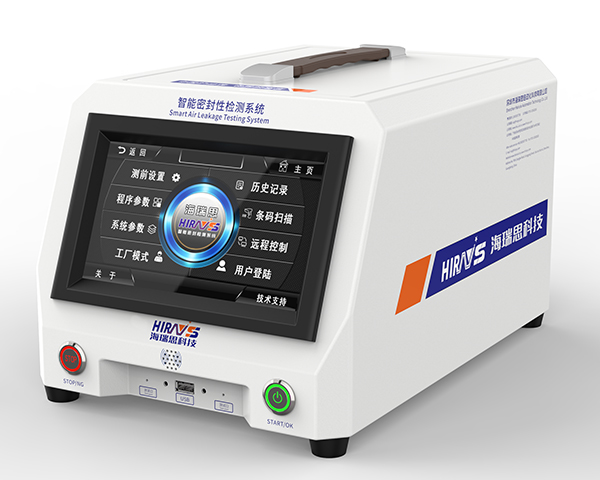
It is crucial to establish a good customer feedback mechanism and continuous improvement process.If a customer complains about the quality of a zinc die-casting product or reports of leakage are found in the market, the company should promptly analyze the reasons and respond quickly.By collecting and processing customer feedback, companies can continuously improve their product design and production processes to ensure that future products continue to be qualified, thereby enhancing customer brand loyalty.
Summary and suggestions
- Choose a testing method that suits your product characteristics to ensure the validity of your test results.
- Pay attention to the pre-treatment of castings to ensure that the product is in the best condition before testing.
- Implement strict testing procedures to ensure the standardization and scientificity of the testing process.
- Record and analyze test data, extract improvement directions from it, and continuously optimize ?????????.
- Maintain good communication with customers, respond to feedback in a timely manner, and enhance customer trust.
in conclusion
Leakage testing of zinc die castings is not only an important part of quality control, but also the basis for improving product market competitiveness.Through the above 5 steps, you can effectively reduce leakage problems and improve product reliability.Want to know more about professional consulting?Visit our website now to contact our experts!
-
2026.04.11Good News | Hirays Honored as "Most Investment-Worthy Enterprise" at 2026 AI Glasses China Tour
-
2026.04.11Why are more and more companies opting for RGA technology for power bank electrolyte leakage detection?
-
2026.03.30Commemorating the revolutionary martyrs and inheriting the red spirit | Record of hirays’s theme activity of walking to commemorate the martyrs’ cemetery
-
2026.03.20Starting from June, the sale of non-compliant power banks will be banned: many companies ignore this detection issue
-
2026.03.16After charging 70% in 5 minutes, how can the safety of the power battery be maintained?
-
2026.03.14Overcoming difficulties and showing responsibility, efficient delivery wins praise - a tribute to the four pioneer employees on the production front line
-
2026.03.03Comparison of mass spectrometry technology applications: How do Heris helium mass spectrometers and RGA series enable precision manufacturing?
-
2026.02.26Construction has started | hirays starts a new journey of struggle in 2026
-
2026.02.06Let’s work together to embark on a new journey | The 3rd hirays Fun Games was successfully held
