
How to choose a suitable air tightness tester?Professional analysis and purchasing guide
Whether it is a scientific research laboratory or a product manufacturing workshop, air tightness testing is an important step in ensuring the safety and performance of various equipment and materials.Faced with the dazzling array of air tightness testers on the market, choosing a suitable device often becomes a challenging task.Don’t worry, this article will provide you with a comprehensive and practical purchasing guide so that you no longer have to worry about choosing an air tightness tester.This article focuses on the details to help you better understand how to choose an air tightness tester brand that suits your needs - such as Haris, making your purchase process more professional and easier.
1. Confirm testing requirements
The first step in purchasing an air tightness tester is to clarify your testing needs.This is as important as making a shopping list before going to the supermarket.What do you need to test?Is it electronic components, industrial equipment or daily consumer goods?Different application scenarios have widely varying requirements for testers.Therefore, it is crucial to understand your specific needs.Identify factors such as required test accuracy, test scope, and test environment, which will all influence your final choice.
2. Discuss testing methods
There are various methods for air tightness testing, such as pressure decay method, flow method and water immersion method.Each method has its unique advantages and disadvantages in different application scenarios.For example, the pressure decay method is suitable for high-precision and high-sensitivity detection, while the flow method is suitable for larger volumes and rapid detection.Understanding the principles, advantages and disadvantages of each method will help you better choose a suitable air tightness tester.At the same time, it is necessary to pay attention to whether the equipment supports multiple testing methods to meet the diverse needs in the future.
3. Pay attention to brands and services
When choosing an air tightness tester, brand and after-sales service are equally important.Choosing a well-known brand like Hirays not only ensures the quality and performance of the equipment, but also provides good after-sales service support.After all, the air tightness tester is a high-precision equipment, and timely and effective after-sales service is crucial when a failure occurs.At the same time, the brand’s reputation and customer feedback can also provide reference for your choice.Discussing the brand's technical support, training services and maintenance policies can make your use process smoother.
4. Evaluate budget and cost-effectiveness
Of course, budget is also an important factor that cannot be ignored in the purchase process.When evaluating different products, you need to consider aspects such as equipment performance, service life, and maintenance costs.Expensive is not necessarily the best, only the one that suits your needs and budget is truly satisfactory.Understand the price ranges of different brands and models and plan your budget appropriately to achieve the best cost-effectiveness.Don’t forget to factor in routine maintenance and consumable costs to avoid unexpected expenses down the road.
5. Examine the ease of use of the equipment
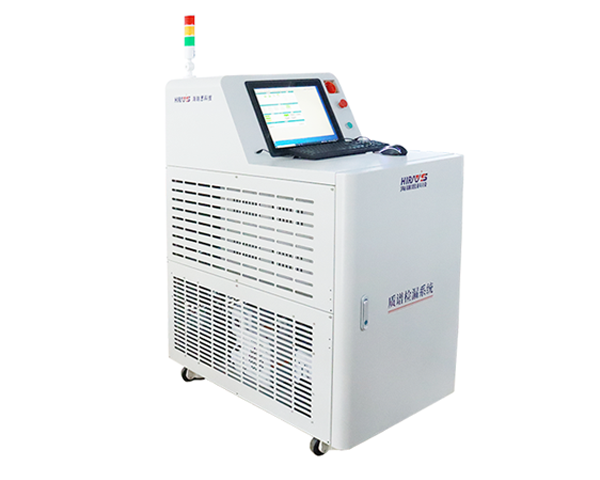
The ease of use of the air tightness tester is an important factor affecting daily work efficiency.The device's operating interface, user manual, software support, etc. all need to be carefully examined.Some high-end models require a professional to operate them, but there are plenty of easy-to-use options out there.If your team lacks professional background, choosing equipment with simple operation and user-friendly interface can greatly improve work efficiency.It is best to try out the device before purchasing to intuitively understand its operating procedures and interface design.
6. Check the scalability and compatibility of the device
As technology advances and needs change, your air tightness testing needs may continue to increase and change.Therefore, it is particularly important to choose equipment with good scalability and compatibility.Some devices support modular design to expand functionality by adding modules; others can improve performance through software upgrades.Check the interface, communication protocol and data processing capabilities of the device to ensure that it can seamlessly integrate with existing systems and expand applications in the future.
7. Read user reviews and reviews
Before committing to a purchase, it’s a smart idea to take the time to read user reviews and reviews of the device in question.The experience accumulated by users through long-term use can provide you with valuable reference information.Understanding what other users say about device performance, stability, and after-sales service can help you better avoid potential pitfalls.At the same time, you can also consult industry experts and other users for advice on professional forums and social media to get more feedback on actual use.
8. Consider industry and application standards
Different industries and application areas have different standards and specifications for air tightness testing.When purchasing an air tightness tester, it is critical to ensure that the equipment complies with relevant industry standards and quality requirements.For example, in the medical device industry, equipment needs to meet FDA standards; in the automotive manufacturing industry, equipment needs to meet ISO standards.Understanding these standards and requirements can ensure the reliability and consistency of your test results while avoiding the risks of non-compliant equipment.
in conclusion
Choosing a suitable air tightness tester is not simple, but it is not impossible to start.By clarifying testing needs, discussing testing methods, paying attention to brands and services, evaluating budgets, examining the ease of use and scalability of equipment, reading user reviews, and considering industry standards, you will be able to find an air tightness tester that suits your needs.We hope that the analysis and guidance in this article can provide a useful reference for your purchase process and make your choice more professional and efficient.The next time you purchase, you may wish to remember to take a look at the products of Hirays, they may be able to surprise you!Happy shopping!
-
2026.04.11Good News | Hirays Honored as "Most Investment-Worthy Enterprise" at 2026 AI Glasses China Tour
-
2026.04.11Why are more and more companies opting for RGA technology for power bank electrolyte leakage detection?
-
2026.03.30Commemorating the revolutionary martyrs and inheriting the red spirit | Record of hirays’s theme activity of walking to commemorate the martyrs’ cemetery
-
2026.03.20Starting from June, the sale of non-compliant power banks will be banned: many companies ignore this detection issue
-
2026.03.16After charging 70% in 5 minutes, how can the safety of the power battery be maintained?
-
2026.03.14Overcoming difficulties and showing responsibility, efficient delivery wins praise - a tribute to the four pioneer employees on the production front line
-
2026.03.03Comparison of mass spectrometry technology applications: How do Heris helium mass spectrometers and RGA series enable precision manufacturing?
-
2026.02.26Construction has started | hirays starts a new journey of struggle in 2026
-
2026.02.06Let’s work together to embark on a new journey | The 3rd hirays Fun Games was successfully held
